Key Takeaways
- Watch for early warning signs such as drips, slow drains, odors, stains, weak water flow, and unusual disposal sounds.
- Check under-sink pipes, faucets, shut-off valves, dishwasher hoses, and refrigerator water lines regularly.
- Prevent clogs by keeping grease, oils, and food waste out of drains.
- Address recurring leaks, backups, low pressure, and disposal problems before they cause larger damage.
- Use safe DIY checks for minor issues, but call a professional for hidden leaks, electrical concerns, or persistent plumbing problems.
- Routine kitchen plumbing maintenance can reduce water waste, protect cabinetry and flooring, and prevent costly disruptions.
The kitchen puts plumbing to work all day, from filling a coffee pot to running the dishwasher after dinner. Because these fixtures are used so often, a drip, slow drain, odd odor, or faint stain inside a cabinet can feel easy to postpone. Unfortunately, small issues can lead to damaged cabinetry, mold-prone moisture, wasted water, or a disruptive backup when left alone. For homeowners who need a local perspective, kitchen plumbing service in Kansas City from Lutz Plumbing, Heating, Cooling, & Electrical covers sink, faucet, garbage disposal, drain, water-line, and shut-off valve needs. The woman-owned, family-operated company has served Kansas City area homeowners since 1920, with kitchen plumbing support across Lenexa, Overland Park, Olathe, and nearby communities. The practical goal is the same for any home: identify the warning signs early, take safe first steps, and know when the problem requires professional repair.
The First Warning Signs Homeowners Often Miss
Start paying attention when you notice moisture or staining beneath the sink, a faucet that drips after it is shut off, slower-than-normal draining, gurgling sounds, or a musty smell around the sink or dishwasher. Low pressure at one kitchen faucet and a disposal that hums, shakes, or develops recurring odors also deserve attention. A problem does not have to be dramatic to be real.
A Dripping Faucet Is More Than a Minor Nuisance
Drips often come from worn washers, seals, cartridges, or valve components. Leaks can also develop at the handle, faucet base, or flexible supply lines below the counter. Rather than repeatedly tightening the handle, identify where the water appears and replace the correct worn part when practical. If the fixture is heavily corroded, loose at its base, or continues leaking after a basic repair, it may be time for a closer inspection or replacement.
Slow Drains Can Point to a Larger Blockage
Grease, soap residue, food particles, and sediment can collect gradually in the drain and P-trap. A sink that drains slowly once after a large meal may be manageable, but a drain that repeatedly slows or backs up signals a persistent restriction. Keeping cooking grease and food waste out of household drains matters, especially because grease, oils, coffee grounds, and excess food solids can cause clogs and strain septic systems.
- Remove visible debris from the drain opening and clean the sink strainer.
- Use a sink plunger correctly. On a double-basin sink, seal the second drain opening first.
- Clean removable drain parts only if they are easy to access, and you can reassemble them securely.
- Stop using the sink if water rises, overflows, or backs up into the other basin.
Avoid relying on chemical drain cleaners for recurring clogs. They can create harsh fumes, damage some older piping, and make later repair work more hazardous. Mechanical clearing or a professional diagnosis is usually the safer path when the problem returns.
Hidden Leaks Under the Sink Can Damage Cabinets
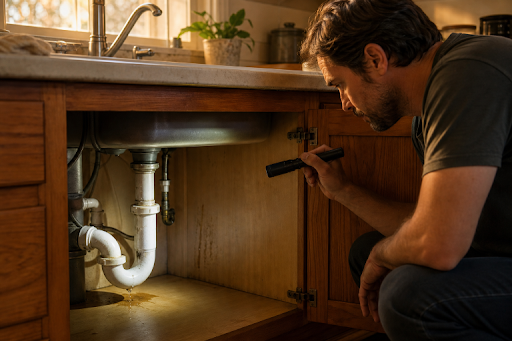
Some leaks appear only while water is running, the dishwasher is draining, or the disposal is operating. Empty the cabinet so moisture is visible, then inspect faucet supply connections, shut-off valves, the P-trap, dishwasher hoses, and disposal connections. Place a dry paper towel beneath each connection to reveal slow drips that may otherwise go unnoticed. Turn off the local shut-off valve if an active leak is spreading or the cabinet base is soaked. If the valve will not stop the flow, turn off the home’s main water supply. Soft cabinet wood, a damaged valve, or water coming from a wall or pipe connection should be treated as a repair that needs prompt professional help.
What Low Water Pressure May Be Telling You
Low pressure at one kitchen fixture is different from low pressure throughout the home. When other faucets work normally, the issue may be a clogged aerator, mineral buildup in the faucet, a partly closed shut-off valve, or a restriction in the fixture-side supply line. Homeowners can compare the kitchen faucet with other fixtures while considering common causes of low water pressure and their solutions. If the pressure is low everywhere, the cause may be the main supply, a municipal issue, or a broader plumbing restriction.
Garbage Disposal Problems That Should Not Be Ignored
A humming disposal may have a jammed impeller, while grinding, shaking, leaks, or recurring odors can indicate a worn unit, loose mounting hardware, or drain buildup. Always turn off the power before checking the disposal. Use tongs to remove visible objects, never your hands. Repeated jams, electrical faults, leaks from the disposal body, or a unit that will not reset are reasons to call a professional. Keep grease, cooking oil, bones, shells, fibrous vegetable scraps, large quantities of coffee grounds, and non-food items out of the disposal. Even a functioning disposal is not a substitute for a strainer and responsible food-waste habits.
When a Kitchen Plumbing Repair Becomes an Emergency
- Act now: A supply line bursts, water is spreading across the floor, or a shut-off valve cannot stop the flow.
- Call soon: A leak returns after a temporary fix, a drain backs up more than once, cabinet wood feels soft, or you see corrosion around a valve.
- Monitor briefly: A minor drip has stopped, and its cause is clear, but the fixture still needs a scheduled repair.
Safe DIY Checks and Jobs Best Left to a Professional
Reasonable homeowner tasks include cleaning a faucet aerator, checking visible supply connections, using a plunger, replacing a simple faucet filter, and removing visible disposal debris with tongs after cutting power. Professional service is wiser when a valve, pipe, or wall connection leaks; low pressure continues after cleaning; a clog returns or affects multiple fixtures; or a disposal hums, leaks, or has an electrical problem.
Kitchen Plumbing During a Remodel or Fixture Upgrade
Choose the sink and faucet before finalizing the counter measurements. Confirm the dishwasher and refrigerator water-line locations, leave shut-off valves accessible, use proper drain connections, and test every connection before cabinetry or walls are closed. Fixture placement affects drain alignment, cabinet storage, water lines, and future service access, so that planning can prevent expensive changes later.
A Simple 10-Minute Kitchen Plumbing Check
- Open the sink cabinet and look for dampness, stains, or warped wood.
- Run hot and cold water while checking supply lines and the P-trap.
- Watch whether the sink drains at its normal speed.
- Listen for bubbling, gurgling, humming, or unusual disposal sounds.
- Confirm shut-off valves are visible and reachable.
- Clear food scraps from the sink area and note recurring symptoms.
Common Questions About Kitchen Plumbing Problems
How soon should a small faucet leak be repaired?
A minor drip may not require emergency service, but it should be scheduled for repair rather than ignored. Water reaching the counter, cabinet, supply connection, or floor needs faster attention.
Why does a kitchen sink drain slowly?
Surface debris, grease buildup, food waste, a dirty P-trap, or a deeper drain restriction can all slow the sink. Recurring slow drainage is more concerning than a single isolated event.
When should a garbage disposal be replaced?
Replacement may make more sense when the disposal has severe corrosion, recurring leaks, repeated jams, motor failure, or repair costs that approach the price of a new unit.
Small Checks Can Prevent Big Disruptions
Kitchen plumbing usually gives clues before it causes major damage. A few minutes spent checking for moisture, testing water flow, and removing safe-to-clear buildup can protect the home and reduce stress. When the cause is hidden, recurring, or unsafe to handle, prompt professional help is the practical next step.
Conclusion
Kitchen plumbing problems are often easier and less expensive to address when warning signs are noticed early. Regularly checking faucets, drains, supply lines, shut-off valves, dishwashers, and garbage disposals can help homeowners catch leaks, buildup, and worn components before they cause significant damage. Simple maintenance habits also reduce unnecessary strain and water waste. When a problem keeps returning, affects multiple fixtures, or involves hidden pipes, electrical components, or active water damage, professional evaluation is the safer choice. By combining routine inspections with timely repairs, homeowners can keep their kitchens functional, efficient, and protected from avoidable plumbing disruptions.