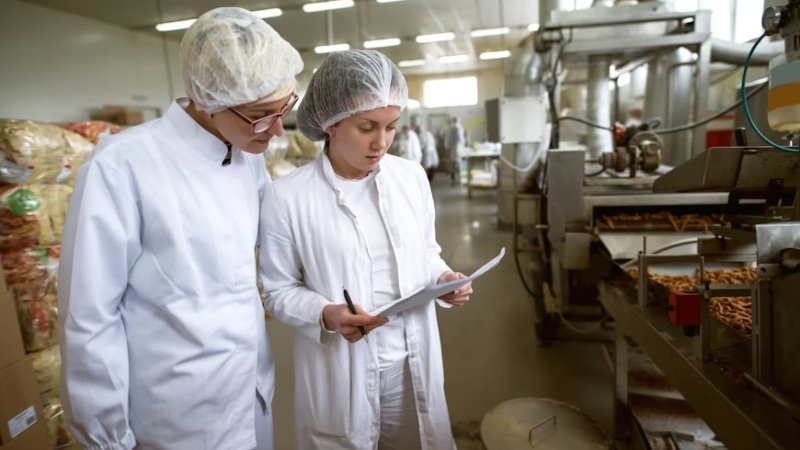
The food industry kills people when water goes wrong. Contaminated process water is behind some of the worst foodborne illness outbreaks in history. Listeria, E. coli, Salmonella — they all travel through water. That is why food processing UV water disinfection systems are not a luxury anymore. They are a baseline requirement for any plant serious about product safety. UV technology neutralizes pathogens without adding chemicals to water. That matters enormously when water touches food directly.
What Actually Goes Wrong With Water in Food Plants?
Water is everywhere in food processing. It washes produce, cools equipment, carries ingredients through pipes, and cleans surfaces. Every contact point is a contamination risk. The U.S. Centers for Disease Control estimates that roughly 48 million Americans get sick from foodborne illness each year. Water is a primary vector in many of those cases. One contaminated water source can spread pathogens across an entire production line in minutes.
Chlorine has been the traditional fix. But chlorine has limits. It forms disinfection byproducts like trihalomethanes when it reacts with organic matter. Those compounds are linked to health risks with long-term exposure. Chlorine also leaves taste and odor residues. In beverage production, that is a product quality problem, not just a safety problem.
Why Does UV Work Better Than Chemical Treatment Alone?
UV light at 254 nanometers hits microbial DNA directly. It scrambles the genetic material so bacteria and viruses cannot replicate. No replication means no infection. The kill rate is not theoretical. UV systems achieve 99.99% reduction of most pathogens at proper dosage levels. That is a four-log reduction — the industry standard for safe disinfection.
UV does not change the taste, smell, or chemical composition of water. No residuals are left behind. No byproducts form. The water that enters a UV system is the same water that exits, minus the pathogens. For facilities producing food and beverages where water contacts the final product, that chemical neutrality is non-negotiable.
Which Food Applications Need UV the Most?
Beverage manufacturing is the obvious one. Any drink made with water — from bottled water to juice to beer — is directly affected by source water quality. A contaminated batch is a recall. Recalls cost money, destroy brand reputation, and sometimes end businesses.
Fresh produce washing is another critical application. The FDA’s Food Safety Modernization Act explicitly requires that water used in produce processing meet microbial safety standards. Leafy greens, berries, and sprouts all harbor bacteria in surface folds. Washing with contaminated water makes the contamination worse, not better. UV-treated wash water eliminates that risk without requiring chemical residue on the produce.
Dairy processing plants use water in pasteurization equipment cleaning and in cooling systems. Cooling tower water that is not properly disinfected can grow Legionella. That is a worker safety issue as well as a product safety issue. UV systems handle cooling water effectively without the chemical handling hazards that come with biocide dosing programs.
What Do Regulators Actually Require?
The FDA and USDA both mandate safe water use in food processing under various regulations. The FSMA Produce Safety Rule sets specific microbial standards for agricultural water. European food safety regulations under EC 852/2004 require potable water throughout food operations. The Global Food Safety Initiative benchmarks — including BRCGS and SQF — expect documented water treatment programs as part of facility certification.
UV is recognized as a validated disinfection technology by all these bodies. Plants that install properly sized UV systems and maintain dosage logs have documentation ready for audits. That proactive compliance posture reduces inspection risk significantly.
How Does UV Fit Into a Layered Safety Strategy?
Smart facilities do not use UV alone. They combine it with filtration to remove suspended solids before UV treatment, because turbid water blocks UV penetration. They also monitor UV intensity continuously. A lamp that degrades over time delivers less dosage. Automated monitoring systems flag drops in intensity before they become safety gaps.
Post-UV storage must also stay protected. Water treated by UV has no residual disinfectant. If it sits in an improperly sanitized tank, recontamination is possible. That is why UV often works alongside low-level chloramine maintenance in storage systems — UV handles the bulk kill, residual chemistry protects the hold.
The food industry is moving toward zero-tolerance on water-related contamination events. The cost of a recall versus the cost of a proper UV system is not even a close comparison. Plants that have not yet made the switch are taking on risk that is increasingly hard to justify.