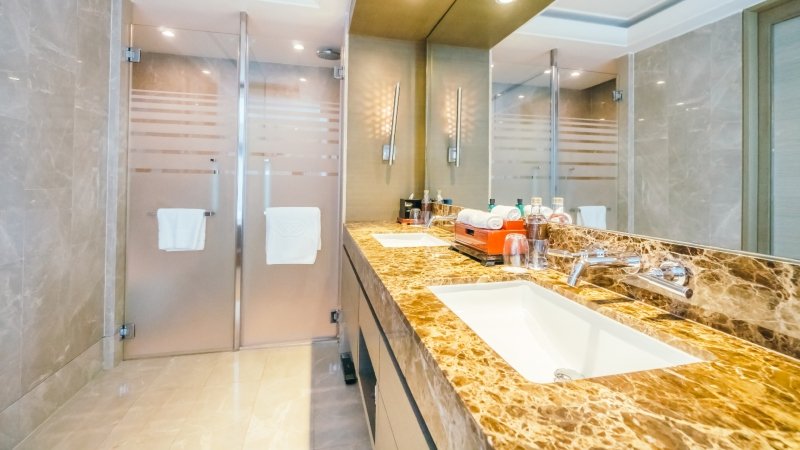
The bathroom is no longer just a utility room. It is a design statement. Modern bathroom tiles have become the single biggest visual driver in bathroom renovations across Australia. According to Houzz’s 2023 bathroom trends report, 72% of homeowners prioritise tile selection above all other renovation decisions. That tells you everything. Tiles set the tone. They define the light, the texture, the mood. Getting them right is not optional. It is the whole job.
What Makes a Tile Truly Modern?
Modern does not mean cold. It does not mean just grey and white. Modern bathroom tiles are defined by three things: material innovation, format size, and surface finish. Large-format tiles, starting at 600x600mm and going well beyond 1200x2400mm, are dominating new builds in 2024. They reduce grout lines, which means less cleaning and a more seamless visual. Rectified porcelain tiles lead this category because they are precision-cut to exact dimensions. The tolerances are within 0.5mm. That matters when you are laying 20 tiles in a row.
Why Is Porcelain Beating Ceramic?
Porcelain has a water absorption rate of less than 0.5%. Ceramic sits at around 3 to 7%. In a bathroom, that gap is enormous. Water penetrates ceramic over time. It does not penetrate porcelain. That is why builders and designers are moving hard toward porcelain for wet zones. Add to that a scratch hardness rating of 7 to 8 on the Mohs scale, and you have a material built for daily abuse. Porcelain does not chip from a dropped shampoo bottle the way softer ceramics do.
Do Finish and Texture Actually Matter?
Yes, and more than most people realise. A polished tile in a small bathroom bounces light and creates an illusion of space. A matte tile absorbs light and feels grounded. Textured tiles, especially in shower floors, carry a slip resistance rating called the R-rating. R10 is the minimum for wet areas under Australian standards AS 4586. R11 and R12 are used in more heavily trafficked or steeper wet areas. Choosing a beautiful tile that fails this rating is a safety problem, not just an aesthetic one.
What Tile Formats Work Best in Small Bathrooms?
Subway tiles in a 75x300mm or 100x300mm format continue to outperform because of versatility. Stack them vertically to add height. Run them in herringbone to add movement. Use a contrasting grout to make the pattern pop. For floors in compact bathrooms, 200x200mm penny round mosaics are making a serious comeback. They conform to curved surfaces and score well on slip resistance. The key is using consistent grout widths. Uneven grout lines are the number one complaint from renovation clients.
How Are Wall Tiles Different from Floor Tiles?
Wall tiles carry no structural load, so they can afford to be thinner and lighter. Most wall tiles run between 6mm and 9mm thick. Floor tiles need to handle impact and point loads, so they run 10mm to 12mm and must meet the breaking strength standard of 1500N under AS/NZS 4459. Using a wall tile on a floor is a common mistake. It will crack. The reverse, using a floor tile on a wall, is acceptable but adds unnecessary weight to the adhesive bond. Match the tile to its zone.
What Role Does Grout Play in the Final Look?
Grout is not an afterthought. It covers between 10% and 15% of the total tiled surface. Epoxy grout costs more upfront but it resists staining and does not require sealing. Traditional cement-based grout needs sealing every 12 to 18 months to prevent mould in wet areas. Colour choice is critical. A white tile with white grout disappears. A white tile with charcoal grout becomes a grid. That grid either looks intentional and sharp, or it draws attention to imperfect installation. Precision matters here more than anywhere else.
What Are the Trends Actually Worth Following?
Japandi bathrooms are not going away. Warm stone-look tiles in beige, taupe, and terracotta are outselling cool greys for the first time in a decade. Fluted tiles on feature walls are spiking in renovation searches. They add three-dimensional texture without requiring art or accessories. Bouclé-finish tiles are emerging in matte porcelain, mimicking fabric texture on hard surfaces. These are not fleeting Pinterest moments. They are responses to a genuine design shift toward warmth, softness, and sensory contrast in bathroom spaces.