Table of Contents
- Why Beach Game Days Work
- Choose the Right Location
- Build a Simple Schedule
- Pick Games for Everyone
- Pack the Right Gear
- Plan for Heat and Water Safety
- Keep the Day Inclusive
- Reduce Mess and Waste
- Sample Beach Game Day Plan
- Common Questions
- Conclusion
A beach game day is an easy way to bring friends and family together for fresh air, movement, food, and low-pressure fun. With a little preparation, the outing can feel relaxed rather than rushed, whether you are hosting four people or a larger group. If you are building a simple game collection for the sand, check their products before deciding which activities fit your group.
The goal is not to fill every minute with competition. The best beach game days leave room for swimming, conversation, snacks, shade breaks, and guests who would rather cheer than play. A thoughtful plan helps everyone enjoy the day at their own pace.
Why Beach Game Days Work
Beach outings naturally mix activity and downtime. Guests can play a short round, take a walk along the shore, sit beneath a canopy, or join the next game when they are ready. Games also solve a common hosting problem: they give people something to do without requiring a formal itinerary.
A successful day can be as simple as a few tossing games, a cooler, folding chairs, and a clearly marked play area. For a mixed group of children, older adults, beginners, and competitive players, variety matters more than intensity.
Choose the Right Location
Start by checking beach rules, parking options, restroom access, and whether permits are required for canopies, large gatherings, or organized games. Choose a flat, firm area that is comfortably away from swimmers, walkways, dunes, nesting areas, and lifeguard access points.
Look at the tide schedule, wind, and forecast before inviting guests. Wind can turn lightweight gear into a nuisance, while an incoming tide may shrink the play space faster than expected. If your group plans to enter the water, review local surf and beach hazard conditions before leaving home and follow posted flags or lifeguard instructions when you arrive.
Build a Simple Schedule
Give the day enough structure to prevent confusion, but avoid a minute-by-minute plan. Short activity blocks of 20 to 40 minutes let late arrivals join easily and give everyone permission to rest.
- Arrive early to set up the shade, chairs, boundaries, and game stations.
- Welcome guests and explain where children can play and where the equipment belongs.
- Begin with simple, low-pressure games while people settle in.
- Pause for water, snacks, sunscreen, and shade.
- Hold a friendly team challenge in the middle of the outing.
- Finish with open play, lunch, photos, or optional swimming.
Pick Games for Everyone
Choose activities based on the space available, the age range of guests, and the conditions on the beach. Tossing and target games work well for casual players, while frisbee, volleyball, and short relays add movement for guests who want more activity.
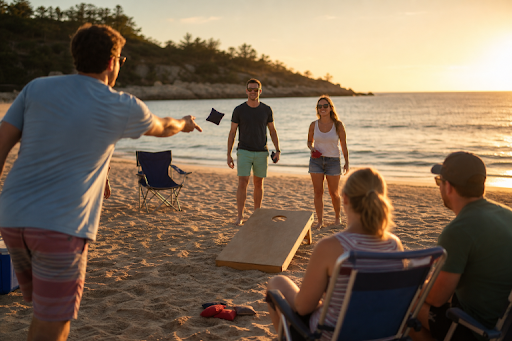
- Skill games: Beanbag tosses, ring tosses, and target challenges.
- Movement games: Frisbee, volleyball, relay races, or sand-friendly obstacle courses.
- Team games: Activities with mixed experience levels and rotating partners.
- Quiet options: Cards, nature bingo, conversation prompts, or a beach-themed scavenger list that does not involve removing natural items.
- Children’s activities: Short rounds with obvious boundaries and simple rules.
Rotate teams after each round. This keeps stronger players from dominating, helps newcomers meet more people, and makes the event feel social instead of overly serious.
Pack the Right Gear
Make one checklist and assign a few items to different guests. Keep heavy equipment close to the parking area when possible, and use a beach wagon or shared carrying plan to save energy.
- Game equipment, spare pieces, cones, and score sheets
- Soft-sided storage bags or bins for sandy gear
- Folding chairs, a shade canopy, towels, and light layers
- Water, a cooler, reusable cups, plates, and utensils
- Sunscreen, hats, sunglasses, hand wipes, and a first-aid kit
- Phone chargers, trash bags, and a separate bag for wet items
Plan for Heat and Water Safety
Heat, reflected sunlight, wind, and active play can tire people faster than they expect. Set up shade first, offer water before anyone asks for it, and schedule a break before the hottest part of the day. Encourage hats, light clothing, and regular sunscreen application.
Keep children within sight, designate an adult to supervise water play, and stop games immediately if lightning, high winds, unsafe surf, or other hazardous conditions develop. A sunny sky does not guarantee calm water, so treat beach rules and lifeguard guidance as the final word.
Keep the Day Inclusive
Inclusion often comes down to small adjustments. Use short instructions, offer seated play, provide lighter equipment when possible, and let guests participate as players, scorekeepers, photographers, or enthusiastic spectators.
Choose team names instead of ranking individuals, shorten rounds when fatigue sets in, and keep a shaded chair near the action. Everyone should have more than one way to contribute.
Reduce Mess and Waste
Use reusable containers, avoid loose decorations that can blow away, and pack one bag for trash and another for recyclables or wet gear. Before leaving, count the equipment and scan the sand around your setup for small items.
Keeping track of cups, wrappers, toys, and game pieces protects the shoreline and makes cleanup easier. NOAA recommends that beach visitors leave with all the containers, toys, and beach chairs they brought, especially when tides and wind can quickly carry loose belongings away.
Sample Beach Game Day Plan
- 10:00 a.m.: Set up, welcome guests, and explain boundaries.
- 10:20 a.m.: Start short team games for all skill levels.
- 11:00 a.m.: Take a water, snack, and shade break.
- 11:30 a.m.: Run a friendly tournament or group challenge.
- 12:15 p.m.: Shift to lunch, open play, or swimming.
- 1:00 p.m.: Clean the area, check for gear, and pack up.
Common Questions
What Is the Best Time for a Beach Game Day?
Morning or late afternoon is often more comfortable than midday. Check local weather, wind, tides, beach access rules, and expected crowd levels before choosing a start time.
How Many People Should Attend?
Match the group size to the available space. Small groups can rotate through one game area, while larger groups benefit from multiple stations, team captains, and a simple schedule.
What Happens if the Weather Changes?
Set a cancellation deadline and communicate a backup plan in advance. You might move to a nearby park, shorten the gathering, or turn the day into a picnic with indoor games.
How Can Beginners Feel Comfortable?
Start with practice rounds, use mixed teams, and reward participation rather than only high scores. The purpose is shared time outdoors, not professional-level competition.
Conclusion
A fun beach game day does not require expensive gear or an elaborate tournament bracket. Pick a suitable location, bring enough water and shade, plan a few flexible activities, and make room for every guest’s comfort level. When safety and inclusion come first, the games become a simple reason to spend more time together outdoors.