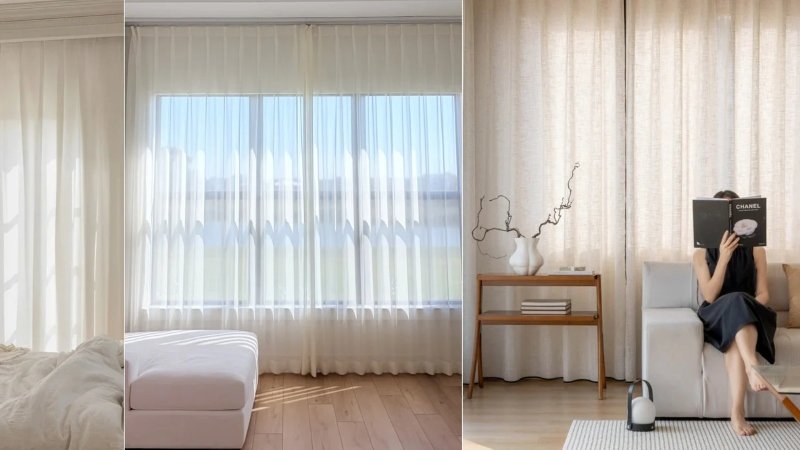
Light is the most underestimated design element in any room. Too much of it washes out colour and creates glare. Too little makes a space feel like a cave. Sheer curtains sit in the middle of that balance. They diffuse direct sunlight, soften the quality of light inside a room, and maintain a visual connection to the outside. Sheer curtains are used in over 60% of Australian living rooms according to industry data from the Window Coverings Association of Australia. That number tells you something. Designers and everyday homeowners keep coming back to them because they work.
What Do Sheer Curtains Actually Do to Light?
Sheers do not block light. They filter it. A standard sheer fabric has a light transmission rate of 60 to 80%. This means most of the sun’s energy still enters the room but the harsh directionality of sunlight is scattered. Hard shadows disappear. Glare on screens reduces significantly. The colour temperature of the light inside shifts slightly warmer or cooler depending on the fabric colour. White and ivory sheers create a warm, diffuse glow. Grey and blue-tinted sheers produce a cooler, more even illumination. During daytime hours, sheers provide a level of privacy from the street. Outsiders looking in see a softened blur rather than a clear view into your home.
Are Sheer Curtains Actually Private at Night?
No. This is the most important thing to understand about sheers. When it is darker outside than inside, the privacy equation reverses. Your interior lighting makes the room visible from outside through a sheer. If full nighttime privacy matters, sheers need to be layered with a blockout or privacy lining behind them. This is called a double-layer window treatment and it is standard in bedrooms and streetfront living rooms. During the day, sheers work beautifully alone. At night, they need a partner. Venetian Blinds and window covering specialists call this a dual-function system. The sheer handles the daytime ambience. The blockout or blind handles the night.
What Fabrics Are Used in Quality Sheer Curtains?
Polyester voile is the most common sheer fabric in Australia. It is lightweight, drapes well, washes easily, and resists fading better than natural fibres. Linen sheers have a more textured, organic look that suits coastal and Hamptons interiors. They are slightly less translucent and more prone to wrinkling. Organza sheers are crisper, with a subtle sheen, and are better suited to formal rooms. Embroidered sheers add texture and visual interest without adding opacity. Thread count in sheer fabrics determines drape quality. Higher thread counts fall more fluidly and hang straighter. Cheap sheers bunch, sag, and develop static that attracts dust faster than quality alternatives.
How Should Sheer Curtains Be Hung for Maximum Effect?
Hang sheers from ceiling height, not from the top of the window frame. This is not a rule for the sake of aesthetics alone. Ceiling-mounted sheers visually extend the wall height and make windows look dramatically larger. The industry standard in interior design for the past decade has been floor-to-ceiling window treatments. If ceiling mounting is not possible, mount the rod at least 15 to 20 cm above the window frame. Width matters as much as height. Sheers should be 2 to 2.5 times the width of the window when gathered. Skimping on fullness creates a flat, underdressed look that defeats the elegance sheers are supposed to deliver.
How Long Do Sheer Curtains Last Before Needing Replacement?
Quality polyester sheers last 5 to 10 years in Australian sun conditions. UV degradation is the main enemy. West-facing windows receive intense afternoon sun and will degrade sheers faster than south-facing windows. Linen sheers in direct sun may need replacement in 3 to 5 years. UV-stabilised polyester fabrics, which are labelled as such by reputable suppliers, extend lifespan significantly. Washing frequency also affects longevity. Most sheers handle machine washing on a delicate cycle, but frequent washing weakens fibres and accelerates colour loss. Shaking sheers regularly to remove dust extends the time between washes and preserves the fabric longer.