The supply chains behind the world’s largest fortunes depend on disciplined industrial systems that can produce the same result across factories, regions and economic cycles. Public attention often follows major acquisitions or new products, but reliable growth comes from less visible work: selecting plant locations, controlling process hazards, maintaining air quality and protecting expensive equipment.
Industrial standards give executives and operations teams a common framework for that work. When companies apply those standards consistently, they can expand production without allowing quality, safety or maintenance costs to drift out of control.
Scaling Global Production Footprints
A larger manufacturing footprint can shorten delivery times, increase regional capacity and reduce dependence on a single facility. Expansion also introduces differences in labor availability, energy reliability, transportation access and supplier quality. A site that looks affordable on a spreadsheet may become costly if materials must cross several borders or if local infrastructure can’t support production schedules.
Companies planning new facilities should model the full movement of materials, components and finished products. Research into reshaping manufacturing footprints shows why exposure needs to be examined at both the product and supplier level. A business may find that its final assembly plants are geographically diverse while several critical components still come from one region.
The broader challenge is similar to scaling a successful product business, where growth depends not only on demand but also on maintaining product quality and building the operational capacity to support a wider market.
Concentration remains a serious concern because dependence on dominant global supply chains in key manufacturing categories can make rapid diversification difficult. Building a replacement supplier can take months, especially when the part requires precise tooling or certification.
Before approving a new plant, operations teams should test several practical scenarios. What happens if a major port closes for two weeks? How much production continues if one supplier misses a delivery? Could another site take over a priority product line within 30 days? These questions turn a high-level expansion plan into an operating model that accounts for real constraints.
Standardized equipment specifications, quality checks and maintenance records also help each new facility reach expected output faster. Local teams can adapt schedules and staffing while core production requirements remain consistent across the network.
Balancing Output and Plant Safety
Production targets influence staffing, maintenance windows and equipment speed. If managers treat safety checks as interruptions, small defects can remain hidden until they cause downtime or expose employees to avoidable hazards. A better operating plan includes inspections and preventive maintenance within the production schedule from the start.
The same principle applies during periods of high demand. For example, a facility adding a second shift should review ventilation capacity, housekeeping routines and maintenance coverage before increasing output. Equipment that performed reliably for one eight-hour shift may need more frequent service when it runs 16 hours a day. Support systems also face higher loads, even when the main production line appears capable of handling the increase.
Clear leading indicators help managers identify pressure before an incident or shutdown occurs. Useful measures include overdue inspections, repeated equipment alarms, unusual pressure readings, near-miss reports and unplanned maintenance hours. Output figures show what the plant produced, while these operational measures reveal whether current performance can continue safely.
Building supply chain resilience also depends on keeping production facilities stable and reliable. A company gains little from securing backup suppliers if a preventable plant failure stops production.
Executives should ask plant leaders to report safety and reliability data beside volume, cost and delivery performance. That reporting structure gives each measure comparable visibility. It also reduces the chance that short-term production gains will conceal a growing maintenance backlog that requires a longer and more expensive shutdown later.
Upgrading Heavy Air Filtration Systems
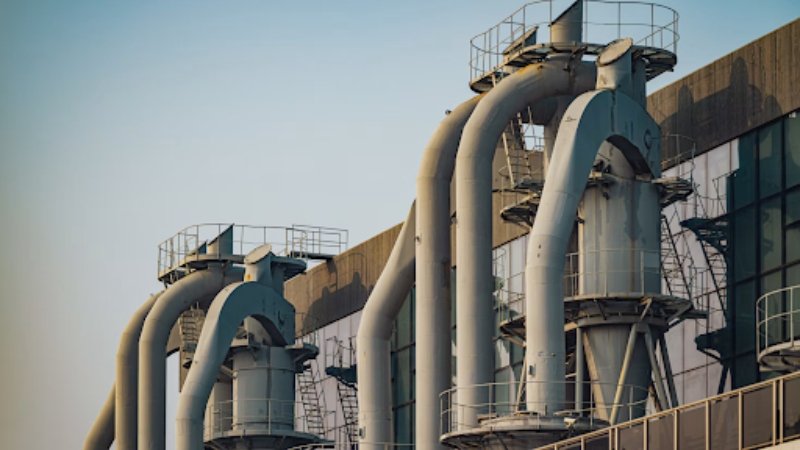
Industrial air filtration systems collect airborne particles created by processes such as mixing, grinding, cutting and material transfer. Their performance affects workplace conditions, equipment cleanliness and production reliability. Filters, fans, ductwork and collection points must work as one system, so replacing a single component may not correct weak capture or unstable airflow.
Start an upgrade assessment with measured operating data. Teams should record airflow, pressure drop, particle characteristics, process temperature and operating hours. They should also document where material escapes, how often filters need replacement and which production changes occurred before performance declined. This evidence helps engineers distinguish between worn parts, poor duct design and a system that has become too small for current production.
Compatibility matters when replacing collectors or internal components. A facility manager evaluating a Farr dust collector or compatible filtration parts should confirm dimensions, airflow requirements, filter media and operating conditions with the system designer or manufacturer. Generic substitutions can create sealing problems, shorten filter life or increase energy use if specifications don’t match.
A phased upgrade may suit a plant that can’t support a long shutdown. Technicians might inspect ductwork first, correct leaks during a scheduled maintenance period and install the main collection equipment during a later outage. Establishing baseline readings before the work gives the team a valid comparison after commissioning.
Training completes the upgrade. Operators need clear instructions for checking gauges, recognizing abnormal readings and reporting changes. Maintenance teams should have inspection intervals, replacement criteria and an accessible parts list. Those details help the system keep performing after the installation crew leaves.
Long-Term Value of Clean Facilities
Clean industrial facilities tend to reveal problems sooner. Leaking seals, worn bearings and loose connections are easier to spot when residue hasn’t accumulated around equipment. Routine cleaning also keeps access routes open and gives maintenance teams a clearer view during inspections.
The financial effects reach beyond appearance. Particle buildup can interfere with sensors, increase heat around machinery and contaminate products. Frequent unscheduled cleaning takes employees away from production tasks, while poor capture can allow valuable material to leave the process. Tracking cleanup labor, filter replacement intervals, rejected output and unplanned downtime gives managers a practical way to estimate the cost of current conditions.
External disruptions raise the value of dependable plants. Monitoring global supply chain risks can help manufacturers prepare for pressures such as trade changes, transportation constraints and geopolitical events. When incoming materials are already uncertain, avoidable facility downtime creates another source of volatility inside the company’s control.
Managers can protect long-term value by assigning ownership for each cleanliness standard. Production teams may handle work-area checks, maintenance staff may inspect collection equipment and facility leaders may review trends across departments. Photos taken from fixed inspection points can document recurring trouble areas more clearly than general descriptions.
Capital planning should use those records. A collector requiring repeated emergency repairs may cost more over three years than a planned replacement, even if its initial repair bills appear manageable. The strongest investment case connects cleaner conditions to specific outcomes such as fewer stoppages, longer component life and steadier product quality. For a large industrial network, that discipline is what turns individual clean plants into a dependable global production system.