Mold can grow in many parts of a home, especially where moisture stays for too long. Bathrooms, basements, kitchens, attics, and areas around leaks are common places to find it.
Some mold problems are easy to notice, while others may stay hidden behind walls or under flooring. A musty smell, dark spots, or signs of water damage can all be warnings. Finding the source of moisture is often the first step toward solving the problem.
Learn the Common Signs of Mold
Visible spots are one of the clearest signs of mold. They may look black, green, white, or gray and can appear on walls, ceilings, floors, or furniture.
A strong musty smell can also point to hidden growth. If the odor is stronger in one room, check nearby walls, cabinets, and areas where water may collect.
Water stains, peeling paint, or soft drywall can also show that moisture has been present. Mold often grows after leaks, flooding, or poor airflow.
If the problem keeps returning, the moisture source may not have been fixed yet. Finding that source is just as important as cleaning the visible area.
Reduce Moisture Around the Home
Mold needs moisture to grow, so keeping the home dry can lower the risk. Fix leaking pipes, roofs, and windows as soon as possible.
Bathrooms and kitchens should have good airflow. Exhaust fans can help remove steam after showers or cooking.
Basements may need extra attention because they can stay damp. A dehumidifier may help control moisture in areas that often feel humid.
Homeowners dealing with larger or repeated problems may look into mold mitigation when professional help is needed to find moisture sources and deal with affected areas.
Clean Small Areas Carefully
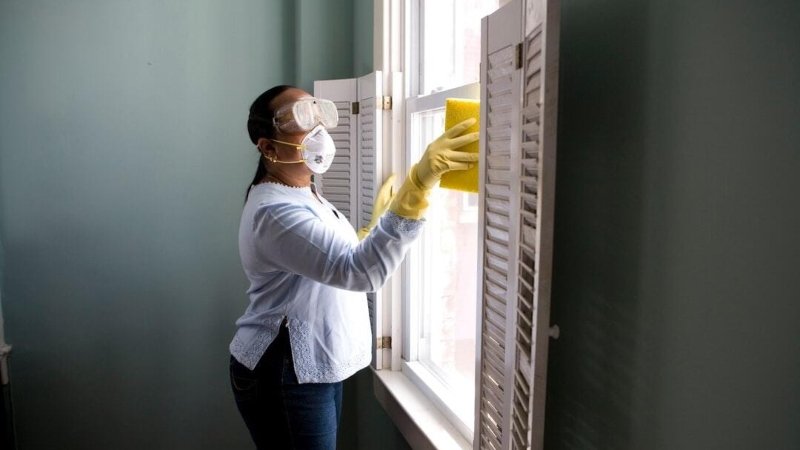
Small areas may sometimes be cleaned with basic household methods. Use gloves and avoid spreading dust or spores into other rooms.
Hard surfaces can often be cleaned with soap and water, then dried fully. The key is making sure the area does not stay wet afterward.
Soft materials can be harder to save. Carpet, ceiling tile, or drywall that has heavy growth may need to be removed instead of cleaned.
Do not paint over mold without fixing the moisture problem first. The growth may return under the new paint if the area is still damp.
If the affected area is large or keeps spreading, professional help may be safer and more effective.
Improve Airflow and Check High-Risk Areas
Good airflow can help reduce damp conditions. Open windows when weather allows and use fans in rooms that stay humid.
Check areas that are easy to forget, such as under sinks, behind furniture, near washing machines, and around air vents. Small leaks can stay hidden for a long time.
HVAC systems should also be maintained. Dirty filters and poor airflow can make indoor air feel stale and may allow moisture to build up in some areas.
Regular checks can help you catch problems early. A few minutes spent looking at high-risk areas can prevent a small moisture issue from becoming a much larger repair.
Conclusion: Keep Your Home Dry and Well Maintained
Mold problems often begin with moisture. Leaks, poor airflow, and damp rooms can all create the right conditions for growth.
Look for visible spots, musty smells, water stains, and damaged materials. Fix moisture sources quickly and keep high-risk areas dry.
A regular home check can make a big difference. By watching for leaks and keeping air moving, you can help protect your home and keep indoor spaces cleaner.