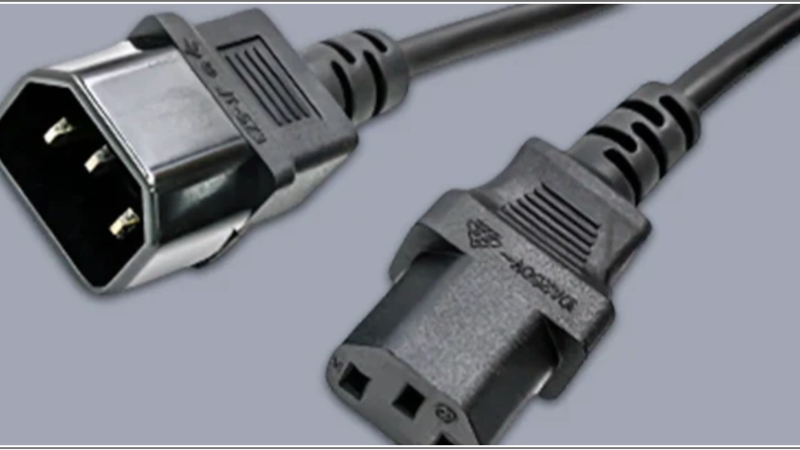
People rarely think about power cords until something goes wrong. Even if a cable is not connected properly or the jacket has become loose, it can stop your work at the worst possible time. These minor glitches are most likely to occur on busy days, when reliability is critical, rather than during downtime.
Most setups depend on cables that quietly do their job in the background. However, the distinction between a basic cord and a well-designed one with better performance becomes apparent only when movement, safety, or durability is put to the test. By choosing better components, everyday use friction is lessened.
This article explores five real-life factors that affect the performance of power cords in the workplace, from home offices to more substantial industrial environments.
1. Connector Standard Fit Stability
Modern setups rely on consistency across devices. This is where power cords are assembled with standardized connectors that provide actual benefit. NEMA and IEC formats guarantee secure device connection without compromises or improvisation.
There are more factors surrounding connector stability than many people realize. Even small discrepancies in power delivery can cause performance issues or even shutdowns. Therefore, standards can minimize that uncertainty by establishing uniform mechanical and electrical interfaces that are shared by equipment within each category.
Research on electrical contact reliability highlights how connector degradation and poor mating surfaces contribute to resistance buildup and heat generation over time. Furthermore, contact instability is an important factor in local thermal stress in low-voltage systems. Altogether, this underscores the need for standardized, well-machined connections for real-world power delivery.
2. Wire Gauge Capacity Balance
The efficiency with which an electric current flows in a cord is indicated by the wire gauge. Thicker conductors, such as lower AWG ratings, reduce resistance and heat buildup. As a result, this has a direct effect on the performance of devices with consistent or high loading.
From charging speed stability to safe operation of tools and appliances, wire gauge selection plays a role in every practical aspect. However, undersized conductors may be operating within their thermal limit, and this results in reduced service life and a higher risk under continuous load.
Research discusses how the conductor’s cross-sectional area influences resistive losses and long-term thermal aging in insulated cables. Furthermore, the findings reveal a clear trend between gauge adequacy and degradation with continuous electrical stress.
3. Jacket Strength Resistance Design
Cable jackets serve more than just as protectors of internal wiring. Instead, they help determine what happens to a cord as it rubs against itself, bends frequently, and is exposed to air and other elements. Materials such as SJTW and SJT-rated insulations are designed to be moved repeatedly and to withstand physical shock and vibration without cracking or exposing conductors.
Durability becomes especially important in shared or mobile environments. Often, cords are pulled, twisted, stepped on, or put in a small gap in furniture. As a result, jacket tears develop. A weak jacket tears slowly, first exposing surface conductors, then internal conductors.
Exposure to moisture, dust, and temperature variations also adversely affects the cable over time. However, excellent jacket construction allows for flexibility and the ability to shield the internal conductors from the exterior. This provides extra redundancy, which means fewer replacement events and more operational safety in harsh settings.
4. Length Choice Workspace Adaptation
Cord length has a great effect on how clean and efficient a workspace will appear. If too short, devices end up awkwardly placed near outlets. However, if the cables are too long, they can create unmanageable trip hazards and increase the risk of tripping.
A well-balanced length, therefore, makes for greater safety and usability. For office displays, not-too-long cords help minimize the need for extension cords. On the other hand, longer cords are helpful in workshop settings where materials and tools should not have to be moved constantly.
Moreover, cable organization is a significant factor in the efficiency of tasks and perceptions of space control. In this sense, environmental design includes quality-of-life aspects such as cord length, which, though a small yet measurable factor, is of great importance.
5. Locking Connection Retention Strength
Connection security determines whether power delivery remains stable under movement or vibration. Locking-style connectors and tightly engineered fittings prevent accidental disconnection, which can interrupt workflows or damage sensitive operations.
This feature becomes critical in environments where equipment is frequently moved or subjected to vibration. Servers, tools, and portable systems benefit from connectors that maintain consistent contact pressure over time.
Engineering analyses of vibration-induced electrical failure show that micro-movement at the connector interface can gradually increase resistance and lead to intermittent faults. Secure locking mechanisms help minimize those disruptions by keeping electrical contact stable even during continuous movement or demanding operating conditions.
6. Heat Load Safety Management
Every energized cable generates heat, even under normal conditions. The ability to manage that heat safely depends on conductor size, insulation quality, and overall design balance. When these elements are aligned, cords operate within safe temperature thresholds.
Heat buildup is not always visible, but its effects accumulate. Over time, repeated thermal cycling weakens insulation and increases resistance. This is why well-designed cords focus on maintaining consistent thermal performance under load rather than just short-term functionality.
Proper heat management also improves overall electrical efficiency. Cords that maintain stable operating temperatures are less likely to experience voltage drops, connector stress, or premature insulation breakdown. That reliability becomes especially valuable for devices that run for long hours each day.
Conclusion
Power cords are not passive accessories. Their design choices directly influence safety, performance, and daily convenience. Connector quality, conductor size, jacket strength, length planning, locking stability, and heat management all work together to determine reliability in real use.
Selecting the right cord is not about overengineering. It is about matching physical design to actual workload conditions. When these features are understood and applied correctly, everyday setups become more stable, safer, and easier to manage.