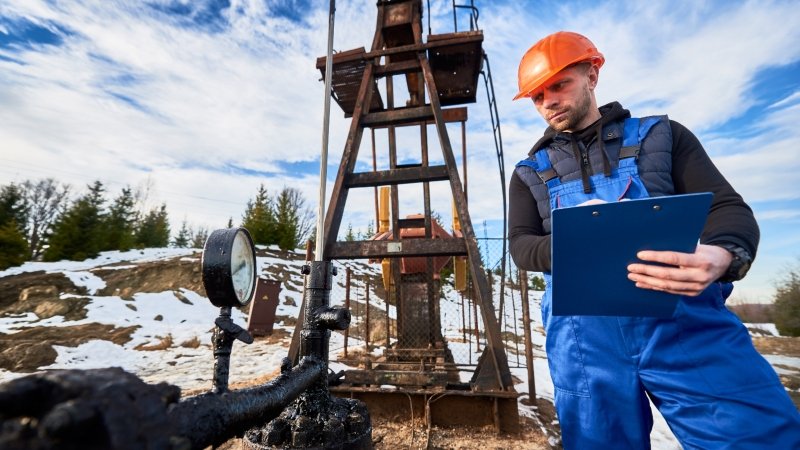
In today’s rapidly evolving construction industry, the surge for high-speed, accurate, and eco-friendly drilling solutions is reshaping how building projects are delivered. Shifts in technology are not only addressing traditional productivity challenges but are also ushering in environmentally conscious practices. Companies seeking innovation and reliability now utilize well drilling contractors specializing in advanced drilling technologies to gain a significant edge on both small and large-scale projects. These contractors employ cutting-edge machinery and software, resulting in better performance and lower emissions, making them highly sought after in urban development and infrastructure upgrades.
Recent introductions, such as electric rigs and robotic drilling systems, are setting new benchmarks in site efficiency, accuracy, and safety. As construction timelines tighten and sustainability becomes non-negotiable, contractors and developers are keenly adopting tools that drive progress and compliance with stricter regulations. These evolving solutions are meeting the sector’s most urgent demands, including speed, cost-effectiveness, worker safety, and quality assurance.
Electric Drill Rigs: A Sustainable Shift
One of the key trends in modern construction is shifting from diesel to electric drill rigs, with companies like Sandvik leading the way. The Commando™ DC310RiE, for instance, is tailored for urban settings where noise and emissions are critical concerns. These electric rigs produce zero local emissions, significantly reducing carbon footprints and aiding eco-friendly certifications. They also deliver precise power and provide extended operational time due to lower cooling requirements. As electric rigs gain popularity, manufacturers are creating more compact, mobile units for diverse applications. Features like remote operation allow for effective use in dense urban environments. The rise of government incentives for green construction is expected to increase investments in electric technology, fostering innovations in power efficiency and analytics that align with sustainability goals.
Robotic Drilling: Enhancing Speed and Accuracy
The adoption of robotic drilling, exemplified by DEWALT’s DALE™, significantly enhances construction efficiency and quality assurance. This technology boasts drilling speeds up to ten times faster than traditional methods, reducing project timelines by nearly 190 weeks across 26 projects. Beyond efficiency, robotic drilling systems provide real-time process data, improving visibility into task performance and enabling proactive resource management. Equipped with advanced sensors and algorithms, these robots can detect ground condition anomalies, transforming risk management practices. As augmented reality and digital planning systems become standard, robotic drilling will further integrate with BIM workflows, creating a highly interconnected jobsite.
Accelerating Data Center Construction
The explosive global demand for robust, high-speed data centers has pushed the construction sector toward robotics to accelerate projects. Precision is paramount, as these sites require thousands of anchor points and utility holes drilled to exact tolerances. Robotic drilling platforms have delivered over 99.97% accuracy on more than 90,000 holes in preliminary deployments, sharply reducing manual rework and costly delays. As artificial intelligence and cloud services fuel a digital infrastructure boom, rapid, precise drilling directly supports the timelines needed to bring new online capacity to market.
What’s more, data center construction often presents logistical and scheduling challenges due to the volume and density of mechanical, electrical, and plumbing installations required. Robotic drilling shrinks the margin for error, enabling multiple trades to run simultaneously and compressing overall project schedules. This orchestration between trades and machine-driven drilling ensures that mission-critical facilities such as hyperscale data centers are delivered on time, with fewer coordination headaches and almost no need for corrective work. The approach is now being evaluated by contractors building other infrastructure-intensive facilities, like hospitals and research labs, further expanding the reach and relevance of advanced drilling methods.
Safety and Precision in Drilling Operations
Modern drilling technology is making construction sites not only faster but significantly safer. Automated systems take over repetitive and dangerous drilling tasks, keeping workers at a distance from high-risk equipment and reducing incidences of fatigue-related errors. Machine precision ensures that all holes and anchors are drilled exactly according to project plans, virtually eliminating mistakes that could compromise structural integrity or require rework. This drop in manual intervention results in fewer injuries and more predictable timelines, an essential advantage for contractors operating under tight deadlines and rigorous safety standards.
In parallel with hardware advances, improved site management protocols and integrated safety sensors have significantly raised safety benchmarks. Drill rigs are now commonly equipped with 360-degree vision cameras and real-time obstacle-detection technology, automatically pausing operation when workers or equipment enter a hazard zone. Training programs for machine operators increasingly lean on simulation and immersive experiences, allowing teams to practice emergency response scenarios using digital twins of actual sites. As a result, crew members are better prepared to recognize and address hazards long before issues arise. These collective advancements foster a safety-first culture, transforming previously high-risk drilling activities into some of the most controlled and predictable operations on the construction site.
Future Trends in Drilling Technology
The integration of artificial intelligence, machine learning, and real-time data analysis is poised to revolutionize drilling operations by introducing predictive maintenance systems that alert operators to machine needs, thereby minimizing downtime. Enhanced software will optimize drilling sequences, increasing efficiency and resource management. These innovations promise to make future projects safer and more environmentally sustainable. The construction industry is on the brink of a drilling revolution as electric and robotic systems enhance sustainability, productivity, precision, and safety, enabling the industry to meet rising demands for quality and speed.