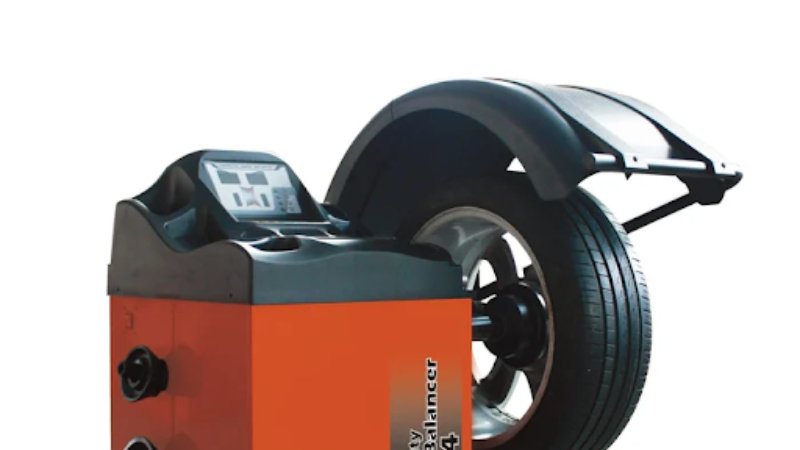
In tire shops and auto repair bays across the United States, a wheel balancer is one of the busiest machines on the floor. Every seasonal changeover from summer to winter tires, every new set sold, and every vibration complaint sends another wheel onto the balancer. When that machine is accurate and quick, the shop runs smoothly; when it drifts out of calibration, comebacks and customer frustration follow. A modern self-calibrating wheel balancer is built to keep that work fast and dependable, removing much of the guesswork that older balancers demanded.
Why Wheel Balancing Matters
Every tire and wheel assembly has tiny variations in weight distribution. Left uncorrected, those imbalances cause the wheel to vibrate as it spins at highway speed, which a driver feels through the steering wheel and seat. Beyond the annoyance, an unbalanced wheel accelerates wear on tires, suspension components, and bearings. A wheel balancer spins the assembly, measures exactly where and how much weight is uneven, and tells the technician where to add correction weights. Good wheel balancing protects the customer’s tires and ride quality, which is why it is a core service in virtually every American repair shop.
How Self-Calibration Works
The accuracy of any wheel balancer depends on keeping its sensors true. Older machines had to be calibrated by hand with a known reference weight, a step that technicians often skipped until results were already off. A self-calibrating wheel balancer automates that process. Using built-in self-diagnosis, the machine checks its own sensors and corrects for drift, so it stays accurate without a separate manual routine. The practical result is consistency: the first wheel of the morning and the fiftieth of the afternoon are measured to the same standard, and a less experienced technician can trust the readout rather than second-guessing it.
Key Features Buyers Should Weigh
Choosing a wheel balancer is a real investment, and a few factors decide whether a machine earns its place in the shop:
- Accuracy and repeatability, since a balancer that reads the same wheel differently twice will never satisfy customers.
- Independent safety certification, which confirms the machine has been tested to recognized standards by a third party.
- Wheel capacity, meaning the range of rim diameters and widths the balancer accepts, from compact cars to light trucks.
- Cycle speed, because a faster spin-and-measure cycle directly raises how many vehicles a bay can turn over in a day.
- A protective hood, which is often required for safe operation and can be tied to the balancing cycle.
Accuracy and Certification
For a professional balancer, accuracy is not a luxury but the whole point. A machine that places weights even a fraction off will leave a faint vibration that brings the customer back, costing the shop time and trust. Self-calibration protects that accuracy over months of heavy use. Certification matters alongside it: an independently certified wheel balancer has been tested to recognized standards, which reassures shop owners and, in many cases, satisfies insurance and workplace safety expectations. Together, proven accuracy and recognized certification are the foundation buyers should insist on.
Capacity, Compatibility, and the Modern Vehicle Mix
American driveways hold an enormous range of vehicles, from small commuter cars to large pickups and crossovers, and a shop’s wheel balancer must handle all of them. Buyers should confirm the rim diameter and width range, the maximum wheel weight, and the shaft and cone set that secures different hub types. A balancer that comfortably fits the everyday mix of tires a shop sees, including the larger wheels now common on trucks and sport utility vehicles, will not force technicians to turn work away or improvise. Matching the machine’s capacity to the local vehicle mix is one of the most practical decisions in the purchase.
Efficiency in a Busy American Shop
Speed and reliability translate directly into revenue. During the twice-yearly rush when much of the country swaps between summer and winter or all-season tires, a tire shop may balance dozens of wheels a day, and any minute saved per wheel adds up quickly. A self-calibrating wheel balancer keeps that line moving by removing the manual calibration step and by giving clear, trustworthy readings that let a technician place weights correctly the first time. Fewer reworks, fewer comebacks, and a steady cycle time are what separate a profitable bay from a bottleneck during peak season.
Maintenance, Durability, and Value
A balancer lives a hard life, spinning heavy assemblies for years, so build quality is central to its value. A sturdy frame, quality bearings, and a well protected sensor system determine how long the machine holds its accuracy. Self-diagnosis helps here too, flagging issues before they become comebacks. When weighing price, buyers do well to look past the sticker to the cost over the machine’s life: a balancer that stays accurate, needs little manual upkeep, and avoids reworked jobs usually proves the better value, even at a higher initial price. A warranty and accessible support add further assurance for a tool the shop depends on daily.
Ease of Use and Operator Training
A wheel balancer is only as good as the results a technician can get from it, so ease of use is a real buying factor. A clear display, simple data entry for rim diameter and width, and an automatic measuring cycle let even a newer technician balance a wheel correctly and quickly.
Because a self-calibrating wheel balancer keeps its own sensors true, it removes one of the steps where mistakes used to creep in, which shortens training time and raises confidence across the whole crew.
Features such as automatic wheel data detection and guided weight placement reduce guesswork further, so a busy shop is not dependent on a single expert to keep the balancing machine producing accurate work. When several technicians share one wheel balancer through a long day, that consistency keeps quality steady from the first job to the last.
Conclusion
A self-calibrating wheel balancer brings accuracy, speed, and peace of mind to one of the most frequent jobs in any American repair shop.
By keeping its own sensors true, it delivers consistent results that protect customers’ tires and the shop’s reputation alike, while its capacity and certification give buyers the confidence to handle whatever rolls through the door. Shops that invest in dependable, well certified equipment from an established supplier of professional shop tools position themselves to balance wheels quickly and correctly for many years, turning a routine service into a reliable source of satisfied repeat customers.