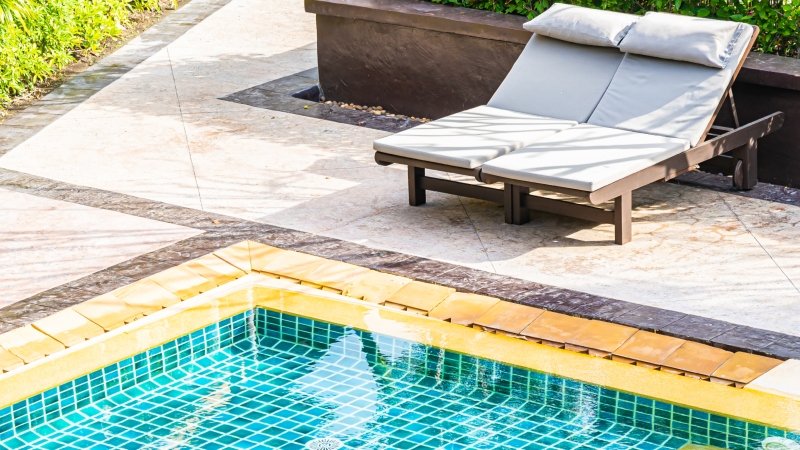
Not every Las Vegas homeowner needs to build a pool from scratch. Thousands of homes across the Las Vegas Valley already have pools — many of them built in the 1980s, 1990s, or early 2000s during the city’s rapid residential expansion. These pools are structurally sound, properly located, and contain substantial construction investment. What they often lack is the swimming pool design sensibility, the modern features, and the visual appeal that today’s backyard culture demands.
An outdated pool is not necessarily a problem with the pool itself. It is a problem with the design surrounding it. Older pools frequently suffer from the same issues: a single, utilitarian shape with no distinct zones; worn or discolored plaster that makes the water look dingy rather than inviting; no water features or lighting; a plain concrete deck that retains heat painfully in the Las Vegas sun; and a backyard that feels disconnected from the indoor living spaces it adjoins.
Pool remodeling — the process of transforming an existing pool through updated swimming pool design, new finishes, added features, and surrounding renovations — can accomplish a transformation that rivals a new build at a significantly lower investment. This guide covers the most impactful pool remodeling ideas for Las Vegas homeowners who are ready to fall back in love with their backyard.
1. Replaster and Resurface: The Highest-Impact Starting Point
Before addressing any other aspect of a pool remodel, the most visible and most impactful single change available is a full replaster and resurfacing. Pool plaster has a functional lifespan of 10 to 15 years under normal Las Vegas conditions — hard water, intense UV, and extreme temperature cycles accelerate deterioration compared to milder climates. An older pool with original plaster is almost certainly showing staining, rough texture, calcium deposits, or areas of aggregate exposure.
New plaster does more than restore the pool’s structural surface — it entirely changes the pool’s visual character. Modern plaster finishes offer a range of aesthetics unavailable to pools built a generation ago:
- Standard white marcite plaster— the traditional finish; clean and bright, makes the water appear blue-green. Least expensive; shortest lifespan in hard Las Vegas water.
- Quartz aggregate finishes— crushed quartz mixed into the plaster surface. Significantly more durable than standard plaster in Las Vegas’s hard-water environment. Available in a range of colors from ivory to charcoal.
- Pebble and exposed aggregate finishes— smooth pebble or crushed stone aggregate creates a highly durable, natural-looking surface. Produces deeper, more complex water colors. The gold standard for Las Vegas pool remodeling in terms of durability and visual richness.
- Glass bead finishes— crushed glass aggregate produces a glittering, highly reflective surface that is particularly dramatic under Las Vegas sunlight and LED lighting at night.
The color of the pool plaster determines the color of the water as seen from outside the pool — one of the most important aesthetic decisions in swimming pool design. Deep charcoal or dark blue plasters produce tropical lagoon colors. Light gray or tan plasters produce warm turquoise tones. White plasters produce the classic bright blue appearance. A remodel is the ideal opportunity to reconsider this choice with modern options.
2. Upgrade the Pool Deck
An original pool deck from the 1980s or 1990s is almost certainly poured concrete — either plain gray or perhaps broom-finished. Beyond its dated appearance, original concrete pool decking presents specific comfort problems in Las Vegas: exposed concrete absorbs and radiates heat so intensely in direct summer sun that walking on it barefoot becomes genuinely painful, and the radiated heat from the deck raises the ambient temperature around the pool.
Modern pool decking materials used in contemporary swimming pool design address both the aesthetic and comfort issues of old concrete:
- Travertine pavers — the most popular upgrade choice in Las Vegas pool remodeling. Travertine is a natural stone that remains substantially cooler than concrete under direct sun due to its porous structure. Light-toned travertine stays 20 to 30°F cooler than dark concrete under identical sun exposure — a meaningful difference when barefoot comfort is the goal. Also visually elegant and widely available.
- Concrete pavers— manufactured pavers in a range of colors and textures offer more design flexibility than poured concrete and allow for easy repair of individual damaged units without resurfacing the entire deck.
Exposed aggregate concrete
- — a textured poured concrete finish that provides better barefoot traction than smooth concrete and can be produced in a range of colors. More affordable than paver options.
- Stamped concrete— poured concrete textured and colored to resemble stone, brick, or other materials. Offers design flexibility at a moderate price point, though it typically runs hotter underfoot than travertine.
- Cool deck coatings— spray-applied coatings that can be applied over existing concrete decks to improve heat reflectivity and add texture. The most budget-conscious option for an immediate comfort and appearance improvement.
The deck material choice also affects the overall visual character of the backyard. A travertine deck with a clean, light tone creates a high-end Mediterranean aesthetic. Darker paver choices create a more contemporary, architectural feel. The deck is often the largest visible surface in the backyard, so its material and color have an outsized impact on the overall design impression.
3. Add a Waterfall or Water Feature
An older pool without water features is like a restaurant without music — functionally complete but missing the atmospheric element that makes the experience genuinely enjoyable. Adding a waterfall, fountain, or other water feature to an existing pool is one of the most popular and most transformative pool remodeling investments available.
Waterfall options for existing pools:
- Boulder waterfall— constructed from natural or artificial rock, positioned at one end of the pool. Can range from a simple single-cascade design to a multi-level grotto with a swim-in cave. The most dramatic option and the most transformative in terms of visual impact.
- Sheet waterfall (laminar blade)— a clean, modern water feature that produces a glass-like sheet of water from a horizontal spillway. Works particularly well with contemporary pool designs and adds significant visual sophistication.
- Deck jets— laminar water arcs that shoot from the pool deck into the water. Can be added to virtually any existing pool with minimal structural modification. Multiple arcs can be programmed to operate independently for a choreographed effect.
- Spa spillover— if the remodel includes adding a raised spa, the spillover cascade from spa to pool serves as both a water feature and an aesthetic element. A raised spa can be added adjacent to most existing pools as a separate gunite structure connected to the existing pool’s plumbing.
Water features do more than look beautiful — they add the sound of moving water to the backyard environment, which dramatically changes the sensory experience of being outside. The sound of water masks traffic noise, creates a sense of privacy, and produces the psychological relaxation effect that makes resort pools feel different from residential ones. In swimming pool design, this acoustic benefit is frequently underestimated by homeowners until they experience it in a completed remodel.
4. Install LED Color Lighting
Outdoor entertaining culture in Las Vegas naturally extends into the evening, and a pool without evening lighting is a pool that gets used for far fewer hours. Modern LED pool lighting systems — a simple and relatively affordable addition to any existing pool — transform the evening pool experience completely.
LED pool lights can be installed in existing pool niches or, in pools that did not originally have underwater lighting, added to the pool wall with minimal construction disruption. Modern LED systems produce the full RGB color spectrum, can cycle through color programs automatically, and are controllable from a smartphone app.
The visual impact of a well-lit pool at night — particularly one with a waterfall or water features that interact with the light — is dramatic enough that many homeowners describe it as looking like a completely different pool after dark. For families who entertain outdoors regularly, upgraded pool lighting is one of the highest-return improvements in pool remodeling in terms of added usable hours and the impression it makes on guests.
Pool lighting should be coordinated with the broader outdoor lighting design — path lighting, landscape uplighting, and pergola or overhead string lights — to create a cohesive evening environment rather than a single lit pool surrounded by darkness.
5. Add a Baja Shelf to an Existing Pool
Baja shelves — the shallow, flat lounging ledges that have become one of the most requested elements in contemporary swimming pool design — can be added to most existing pools as part of a remodel. The process typically involves extending the pool wall and floor at the shallow end or at a corner, constructing the shelf in gunite, and refinishing the addition to match the updated pool surface.
Adding a Baja shelf to an existing pool requires the permits and expertise of a qualified pool remodeling contractor, but the structural work is well within the scope of a standard pool renovation project. The result is a fundamentally different pool — one with a distinct, designated relaxation zone that extends its functional appeal to a broader range of users and occasions.
For Las Vegas homeowners with children or grandchildren, the Baja shelf addition is particularly valuable. Children who are too young or too small for the main pool body have a safe, supervised area that is engaging and fun. Adults can relax in a few inches of water with a cold drink without having to swim. The shelf also creates a natural gathering spot for parties — a place where guests can stand in water, converse, and remain cool without needing to be actively swimming.
6. Landscape Integration: Connecting the Pool to the Backyard
An older pool often sits in the middle of a backyard surrounded by an expanse of plain concrete, with no meaningful connection to the indoor living spaces or the surrounding landscape. Modern swimming pool design thinking treats the pool as the centerpiece of an integrated outdoor living environment, not as a standalone feature.
Landscape integration as part of a pool remodel can include:
- Adding raised planting beds adjacent to the pool deck to soften the transition from water to yard and add visual layering to the design
- Installing a pergola or shade structure over the pool deck or lounge area — essential for the Las Vegas climate and transformative for the design aesthetic
- Creating an outdoor kitchen or bar area adjacent to the pool, with a counter height that allows interaction between people in the pool and those cooking or serving
- Adding artificial turf in areas surrounding the pool where grass maintenance is difficult due to pool chemical splash — modern artificial turf products look convincingly natural and eliminate the browning that often affects natural grass adjacent to pools
- Updating fencing with privacy screens, decorative panels, or landscaping that creates a sense of enclosed, resort-like privacy rather than a pool visible to neighbors from all sides
- Connecting the pool visually to the house through coordinated hardscaping, consistent material choices, and transitional design elements that make the outdoor space feel like an extension of the interior
7. Automation and Energy Efficiency Upgrades
An older pool almost certainly has an older pump, filter system, and control setup. Upgrading these systems during a remodel is not glamorous, but it delivers real financial returns and dramatically improves the pool ownership experience.
- Variable-speed pumps— replacing a single-speed pump with a modern variable-speed pump can reduce pool energy consumption by 50 to 70 percent. In Nevada, where residential electricity rates are meaningful, this generates measurable annual savings.
- Saltwater conversion— converting a chlorine pool to a saltwater system reduces chemical handling, produces softer-feeling water, and automates the sanitization process. Highly popular in Las Vegas pool remodeling because of the improved water feel and reduced maintenance burden.
- Automation system— adding a pool automation controller allows smartphone control of all pool functions: pump scheduling, lighting, temperature, chemical dosing, and cover operation. This convenience upgrade also enables energy-efficient scheduling.
- Pool cover— an automated or manual pool cover reduces evaporation dramatically, which in the Las Vegas desert is both an environmental and a financial benefit. Pools without covers can lose 1 to 1.5 inches of water per week during peak summer through evaporation alone.
Creating a Timeline and Budget for Your Pool Remodel
| Remodel Element | Relative Investment | Impact Level |
| Replaster / Resurface | $$ | Very High — transforms water appearance |
| Deck upgrade (travertine) | $$$ | Very High — comfort + aesthetics |
| LED color lighting | $ | High — extends evening use significantly |
| Waterfall / water feature | $$–$$$ | Very High — visual & acoustic impact |
| Baja shelf addition | $$$ | High — expands functional use cases |
| Saltwater conversion | $$ | High — water quality & maintenance |
| Variable-speed pump | $ | Medium — energy savings over time |
| Automation system | $$ | High — convenience & efficiency |
| Landscape integration | $$–$$$$ | Very High — transforms overall backyard |
| Raised spa addition | $$$$ | Very High — year-round use + visual drama |
$ = budget-friendly | $$ = moderate | $$$ = significant | $$$$ = premium investment
Where to Start: The Right Sequence for a Pool Remodel
Sequencing a pool remodel correctly prevents the common mistake of redoing work that should have been completed in a different order. The recommended sequence for most Las Vegas pool remodeling projects is:
- Step 1: Structural assessment— before any cosmetic work, a qualified contractor should assess the pool shell, plumbing, and equipment for any issues that must be addressed before surfaces are renewed
- Step 2: Equipment upgrades— pump, filter, automation, and saltwater conversion should be done before replastering, as equipment changes may require plumbing modifications
- Step 3: Structural additions— Baja shelves, spa additions, or waterfall structures that require new gunite work are done before surface finishes
- Step 4: Plaster and tile— after all structural work and equipment changes are complete, the pool is replastered and new tile is installed
- Step 5: Deck and surroundings— deck resurfacing or replacement, followed by landscape work and shade structures
- Step 6: Lighting and automation— final electrical connections, lighting installation, and automation programming
An outdated pool is not a dead end — it is an opportunity. With the right swimming pool design vision and a qualified remodeling team, virtually any existing Las Vegas pool can be transformed into a backyard centerpiece that looks current, performs better, and genuinely enhances your daily life.
Desert Springs Pools & Spas specializes in pool remodeling throughout the Las Vegas Valley, bringing modern swimming pool design expertise and construction quality to pools of all ages and conditions. Whether you are looking to replaster and update finishes, add water features and lighting, or completely reimagine your backyard with new features and landscaping, our team has the design capability and construction experience to bring your vision to life. Contact Desert Springs Pools & Spas today to schedule your complimentary remodeling consultation — and start the transformation your backyard deserves.