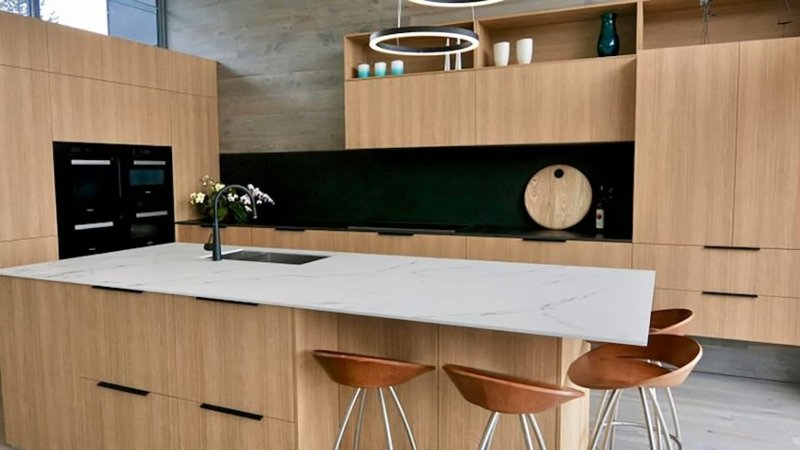
Australia’s kitchen design scene has changed a lot in the last five years. More people are cooking at home now. That means kitchens need to do more jobs at once. They need to look great and work even better. The demand for modern kitchen designs in Australia is growing fast, especially as open-plan living becomes the standard. This article breaks down what is actually happening in Australian kitchens right now, backed by real data and real shifts in how people live.
Why Are Australian Kitchens Getting Bigger?
Australian homes are among the largest in the world. The average new home sits at around 235 square metres. Kitchens are claiming more of that space. Why? Because the kitchen is no longer just for cooking. It is where kids do homework. It is where people have wine with guests. It is the main social room in the house.
A 2023 Houzz Australia Kitchen Trends Study found that 38% of renovating homeowners prioritised the kitchen above every other room. That is not a small number. People are spending serious money here. The average kitchen renovation budget in Australia now sits between $25,000 and $45,000.
What Materials Are Actually Dominating Right Now?
Stone benchtops are everywhere. Engineered stone holds about 60% of the benchtop market in Australia. Porcelain slabs are catching up fast because they resist heat, scratches and staining better than most alternatives.
Cabinetry is moving away from glossy white. Matte finishes in deep greens, charcoal and warm timber veneer are the dominant choices in 2024 and into 2025. Timber adds warmth. Dark tones add drama. Both choices say something deliberate about the homeowner.
Handleless cabinetry is no longer a trend. It is the default. Push-to-open systems and integrated finger pulls keep surfaces clean and reduce visual noise. That matters in open-plan spaces where the kitchen is always on display.
Is the Open-Plan Kitchen Design Here to Stay?
Yes. Open-plan kitchen, dining and living spaces now appear in over 70% of new Australian home builds. The kitchen island is central to this layout. It acts as a prep space, a dining spot and a room divider all at once.
But something is shifting. More designers are now recommending a scullery or butler’s pantry alongside the main kitchen. This gives homeowners the best of both worlds. The main kitchen stays clean and styled. The mess gets hidden in the scullery. Demand for butler’s pantries rose by 28% in Australian renovation projects between 2021 and 2024.
How Is Smart Technology Changing the Kitchen?
Australian homeowners are adopting smart kitchen tech faster than most expect. Induction cooktops with integrated ventilation are replacing separate rangehoods. Refrigerators with internal cameras let you check contents from a supermarket aisle. Touchless taps are now a standard request in mid-to-high range renovations.
Voice-controlled lighting and smart ovens that preheat on command are moving from luxury to expectation. About 22% of Australian kitchen renovations in 2024 included at least one smart appliance integration, up from 9% in 2020. That growth is steep and it is not slowing down.
What Do High-End Australian Kitchen Brands Focus On?
Precision is everything at the top end. European-influenced design, especially from Italian brands, dominates the premium kitchen segment. These kitchens prioritise flush alignment, invisible hinges, integrated appliances and zero visual clutter.
Storage systems are engineered, not improvised. Deep drawers replace lower cabinets. Internal organisers for every category of utensil are built in from day one. The result is a kitchen that looks exactly the same whether it is being used or not.
Lighting design now gets its own budget. Recessed LED strips under cabinetry, pendant lighting over islands and integrated task lighting are all planned during the design phase, not added as afterthoughts.